
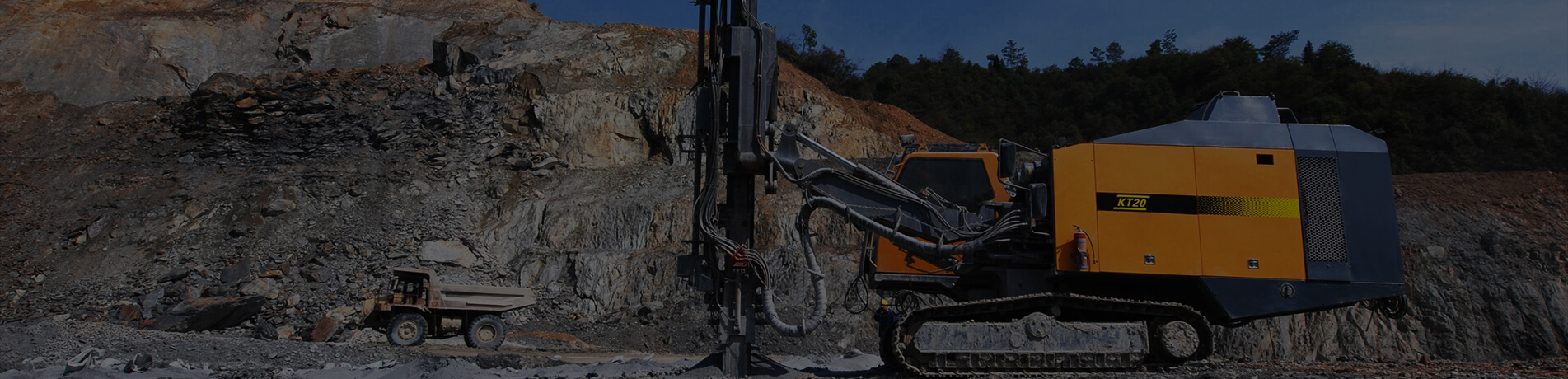
4SETS ZGYX421TA Integrated DTH Drilling Rigs Shipped to Guinea
Four ZGYX421TA DTH Drilling Rigs Shipped to Guinea
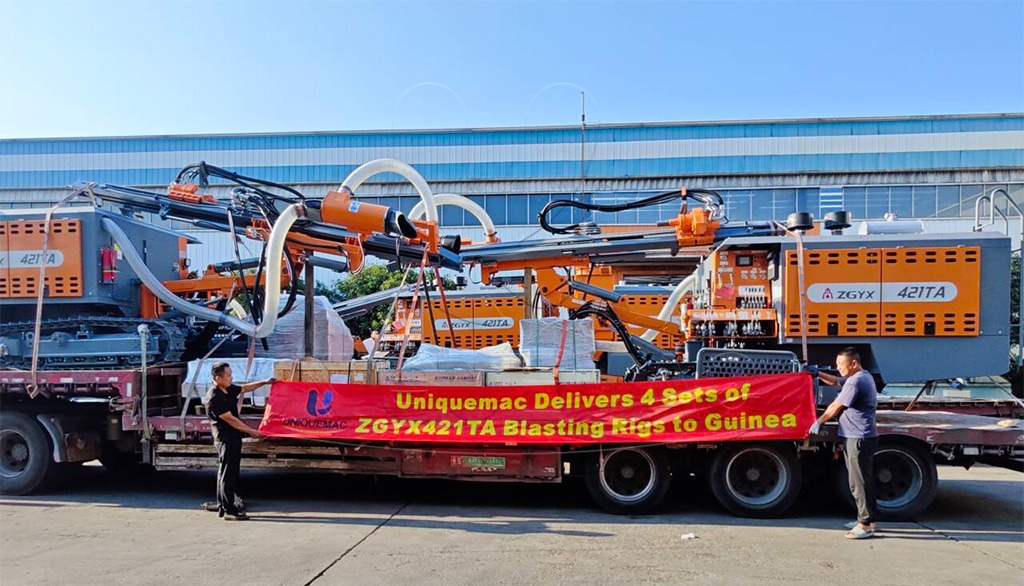
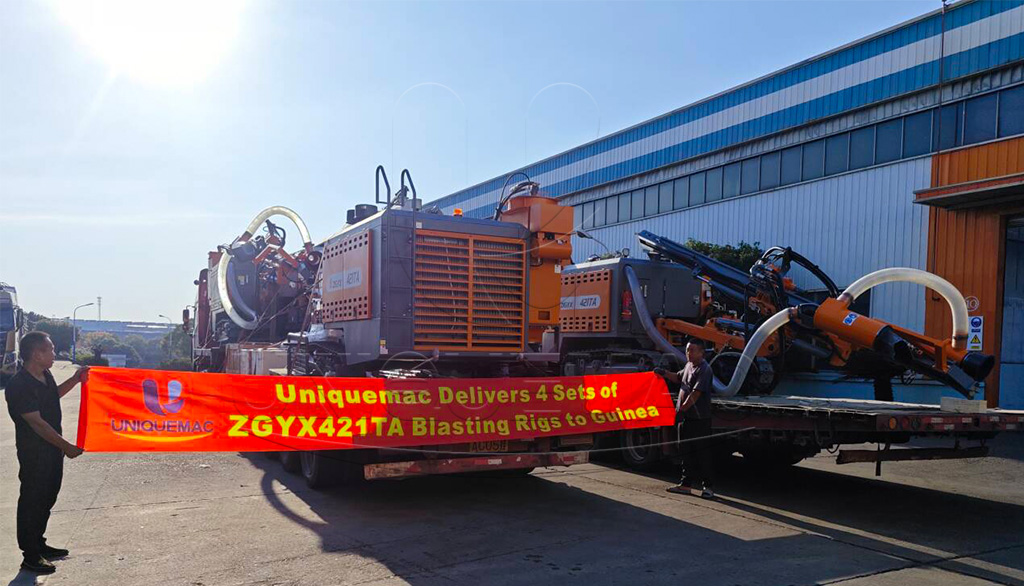
In October 2026, four units of UNIQUEMAC ZGYX421TA integrated DTH drilling rigs completed all pre-shipment inspections and were loaded onto trucks for ocean delivery to Guinea. This batch of equipment is tailored for open-pit drilling and rock blasting projects across West Africa, designed to deliver stable blast hole drilling performance under local rocky terrain and variable site conditions.
This bulk shipment marks another successful order delivery for UNIQUEMAC in the West African mining market. It fully demonstrates the company’s steady production capacity and complete supply chain for integrated DTH drilling rigs. Before moving into detailed technical features, it is important to understand the real pain points that mine and quarry operators face on-site. Many small and medium open-pit projects struggle with scattered work zones, frequent site transfers, and limited manpower. Split-type drilling rigs with separate air compressors often require extra labour for layout and pipeline connection, which drags down daily drilling progress. The ZGYX421TA was developed precisely to solve these operational bottlenecks, with streamlined structure, simplified site setup and improved continuous drilling efficiency.
We will break down the core advantages of this integrated DTH rig, its applicable project scenarios, the difference between integrated and split-type models, and practical advice for clients selecting drilling equipment for Guinea mining projects.
Why Choose the UNIQUEMAC ZGYX421TA Integrated DTH Drilling Rig?
Integrated Design for Efficient Drilling Operations
The biggest highlight of the ZGYX421TA lies in its fully integrated all-in-one structure. The diesel power unit, screw air compressor, hydraulic drilling system and crawler chassis are all mounted on a single tracked frame, forming a self-contained drilling unit that requires no external auxiliary equipment.
Traditional split-type DTH rigs need separate mobile air compressors connected by long air hoses. Operators spend extra time positioning two pieces of equipment, arranging air pipelines and checking connection points before starting work. The integrated structure eliminates these extra steps entirely. Once the rig drives into position on the bench, the crew can start drilling within minutes. The whole machine layout stays compact, with fewer exposed pipelines and fewer potential failure points on site.
Actual construction efficiency always depends on local rock hardness, target hole diameter, drilling depth and site operation conditions. The integrated design cuts down preparation time between drilling shifts, shortens downtime during bench transfers, and creates better continuity for daily drilling tasks. All core power and hydraulic components are centrally arranged, making routine inspection and daily maintenance much easier without climbing around separate equipment units.
Designed for Surface DTH Drilling and Blasting Applications
The ZGYX421TA is purpose-built for surface DTH drilling and rock blasting operations, which covers most open-pit mining and quarry development projects in Guinea and surrounding West African countries.
Typical working scenarios include open-pit mine blast hole drilling, hard rock quarry bench drilling, rock excavation for road construction, and other surface blasting projects that require precise boreholes. DTH drilling works by delivering impact force directly at the bottom of the borehole, which greatly reduces energy loss during rock breaking. This drilling method works reliably on medium-hard and hard rock formations commonly found across Guinea, including granite, limestone and basalt layers.
When paired with matching DTH hammers and drill bits, the rig maintains stable penetration speed even in fractured rock strata. For mine contractors, consistent drilling speed means they can stick tightly to blasting schedules and avoid delays to ore extraction and stone production plans.
Applications of Integrated DTH Drilling Rigs in Mining and Quarrying
Drilling for Open-Pit Mining
Open-pit mining operations follow strict blasting plans. Every bench requires a set number of blast holes with fixed diameter, depth and hole spacing to ensure controlled rock fragmentation.
When selecting drilling equipment for open-pit mining, operators first lock in the required borehole size. Then they select suitable DTH impactors and drill bits according to rock hardness. The drilling rig must keep stable feed pressure and rotation speed to maintain hole straightness. Deviated boreholes lead to uneven blasting results, creating oversized rock blocks that require secondary breaking and raise overall production costs.
The ZGYX421TA‘s hydraulic feed system delivers steady thrust, which helps keep boreholes straight across multiple drilling shifts. Its tracked chassis moves freely between adjacent benches without relying on external transport vehicles, keeping the drilling sequence uninterrupted from one blast zone to the next.
Rock Drilling for Quarry Operations
Quarry sites feature highly variable ground conditions. Some zones consist of soft weathered limestone, while other sections contain solid granite with high compressive strength. Quarry owners need drilling rigs that adapt to changing rock conditions without frequent equipment adjustments.
Before purchasing a drilling rig for quarry work, buyers need to evaluate five key factors: rock hardness, target hole diameter, designed drilling depth, site terrain and long-term maintenance support. The ZGYX421TA’s adjustable feed speed and rotation torque adapt well to mixed rock formations. The automatic rod changer keeps output steady even when crews work extended shifts to meet stone order deadlines.
Many quarries in Guinea operate on small plots with narrow access roads. The compact integrated structure of the ZGYX421TA makes it easier to navigate tight quarry passages compared with larger split rig setups.
Equipment Selection for African Mining Projects
This batch of four ZGYX421TA units heading to Guinea represents a typical equipment choice for West African small and medium mining projects. Most local mine operators face tight budget limits, limited on-site labour and rough unpaved access roads.
Split-type rigs with separate air compressors add extra transport costs and require two separate vehicle units to move between mining concessions. Integrated single-unit rigs cut transport expenses, reduce the number of machines on site and lower the total headcount required for operation and maintenance. The ZGYX421TA balances purchase cost, mobility and daily drilling output, which explains its growing popularity among contractors working on gold mines and stone quarries across Guinea, Ghana and Mali.
Integrated rigs deliver clear advantages for mobile projects with frequent relocation. However, if a mine operates on a fixed bench for years with no frequent moves, split-type rigs can share one large air compressor across multiple drilling hosts, which may lower long-term operational costs. UNIQUEMAC always recommends clients evaluate their long-term project layout before finalising the rig type, rather than simply choosing integrated models without considering site conditions.
UNIQUEMAC’s Drilling Equipment Supply for International Projects
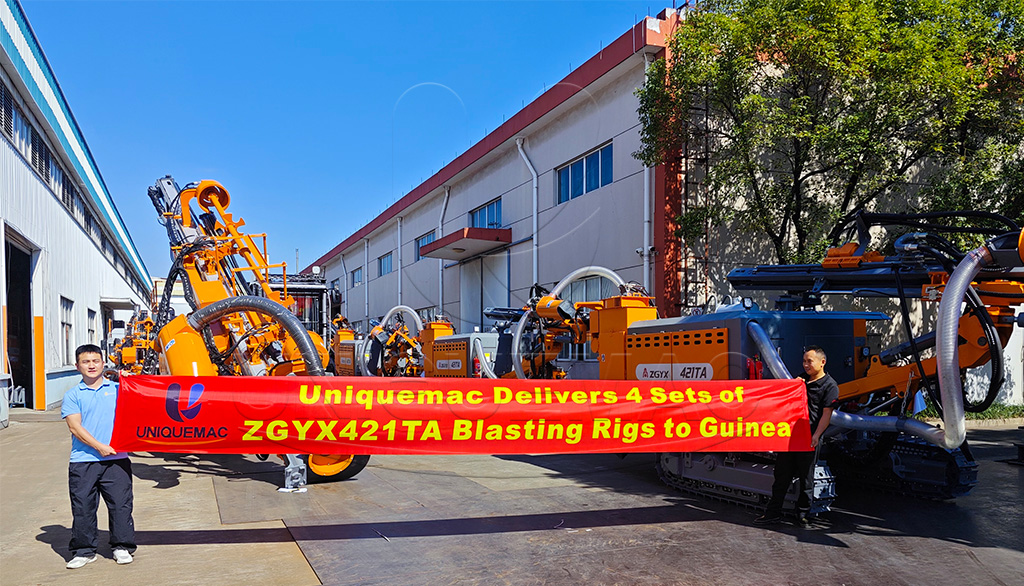
The delivery of four ZGYX421TA integrated DTH drilling rigs to Guinea is just one of many bulk export orders UNIQUEMAC has fulfilled for global mining clients. The company maintains stable production capacity to support batch orders for international construction and mining projects.
UNIQUEMAC’s product portfolio covers a full range of drilling machinery, including surface DTH blast hole rigs, water well drilling rigs, wireline core exploration rigs and other rock drilling equipment for mining and infrastructure projects. The technical team works closely with overseas buyers to match equipment configurations to project requirements, selecting the right borehole range, drilling depth and optional accessories according to site rock conditions.
The full international service package covers technical consultation before purchase, custom configuration adjustment, pre-shipment factory testing, full export documentation and reliable spare parts supply after delivery. Every batch of equipment undergoes strict quality inspection before loading, including full running tests of the hydraulic system, air compressor performance and automatic rod changing function. All units are packed securely for long-distance ocean shipping to avoid damage during transit.
For this Guinea shipment, the four rigs passed a full operational test inside the factory before being loaded onto flatbed trucks. The whole loading process was documented with photos and videos to provide full transparency for the client. UNIQUEMAC keeps complete records of every export shipment, including equipment test reports, packing lists and container loading photos, so overseas buyers can trace the whole order process easily.
How to Choose the Right DTH Drilling Rig for Your Project in Guinea
Guinea’s mining industry continues to expand, with dozens of new open-pit mines and stone quarries starting construction every year. Choosing the correct DTH drilling rig directly impacts daily drilling output, fuel consumption and overall project profitability. Before placing an equipment order, project owners should answer five core questions to narrow down the best rig model:
What drilling diameter do you need?
Confirm the exact blast hole size required by your blasting design. Common sizes include 90 mm, 105 mm, 115 mm, 127 mm and 138 mm. The ZGYX421TA covers the full 90–138 mm range, which fits most small and medium quarry and open-pit mine blast hole specifications. If your project needs larger boreholes above 138 mm, you will need to upgrade to a higher-power rig model with a larger air compressor.
What is your required drilling depth?
Set the maximum single-hole depth based on your bench height and blasting plan. Drilling depth determines the length of drill rods and the feed stroke required on the rig. Buying a rig with insufficient depth capacity will force you to add extra rod sections, slowing down drilling speed and increasing the risk of drill jamming.
What type of rock will you be drilling?
Identify the main rock formations on site, whether it is granite, limestone, basalt or weathered fractured rock. Harder rock requires higher air pressure and impact energy from the DTH hammer. The technical team can match the correct hammer and bit combination once you provide rock compressive strength data, which prevents premature bit wear and improves penetration speed.
What are your site conditions?
Check the terrain slope, road width and ground surface at the mine site. Many mining zones in Guinea have rough mountain roads and steep bench slopes. The rig needs strong climbing ability and compact overall dimensions to travel safely between working zones. If access roads are narrow, an integrated compact rig will be much easier to transport than split-type equipment with two separate units.
What is your daily drilling target?Calculate the total metres of drilling required every day to meet blasting schedules. Your daily production target decides how many rigs you need and whether automatic rod handling is a necessary feature. The automatic rod changing function on the ZGYX421TA cuts down idle time between holes, directly lifting daily drilling metreage without adding extra workers.
No single rig model works perfectly for every project. The final drilling plan should combine rock conditions, blasting design and local safety regulations to confirm the rig configuration, DTH hammer model and drilling parameters. UNIQUEMAC’s engineering team can walk through these details with you to avoid over-investing in unnecessary functions or buying under-powered equipment that limits production output.
Looking for a DTH Drilling Rig for Your Mining Project?
The UNIQUEMAC ZGYX421TA integrated DTH drilling rig remains a practical choice for open-pit blast hole drilling within the 90–138 mm borehole range, especially for mine and quarry projects with frequent site transfers and limited on-site manpower.
If you are planning a drilling project in Guinea or other West African countries, prepare basic project information including required hole diameter, maximum drilling depth, rock type and site terrain before reaching out to equipment suppliers. This information allows technical engineers to evaluate the most suitable rig configuration and provide an accurate solution tailored to your production goals.